
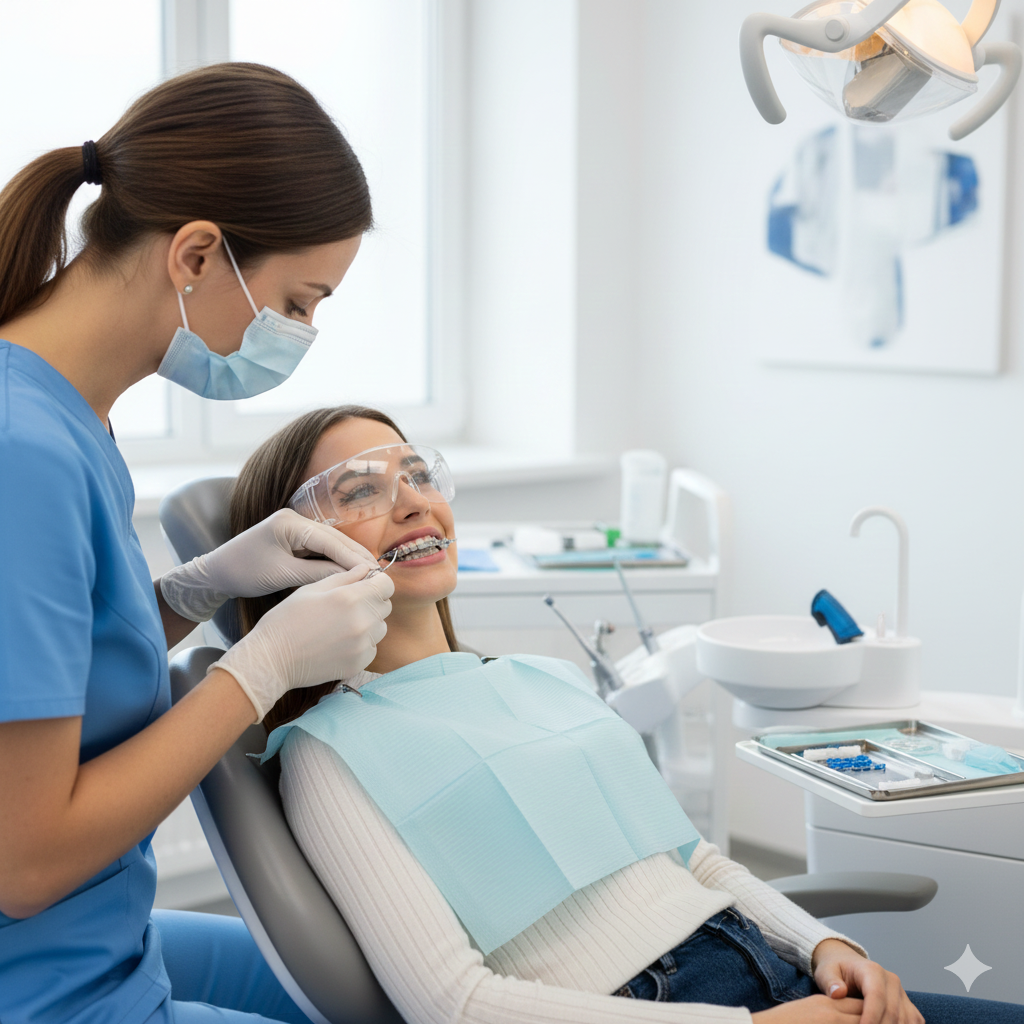
The Modern Revolution in Tooth Straightening
A well-aligned bite does much more than create a photogenic smile — it prevents uneven enamel wear, relieves strain on jaw joints (TMJ), and makes brushing and flossing more effective. Poor alignment is a documented risk factor for gum disease because crooked teeth create overlapping areas where plaque accumulates uncontrollably. According to the World Health Organization, oral diseases affect nearly 3.5 billion people globally, with gum disease being the sixth most prevalent condition — often worsened by misalignment. Historically, silver metal brackets were the only choice for correction. Today, patients at Shekhar Dental Clinic can choose between subtle ceramic braces and nearly invisible custom plastic aligners.
How Do Braces Work?
Traditional metal or ceramic braces consist of small brackets bonded directly to the tooth enamel using composite resin. A continuous archwire connects all brackets and applies gentle, constant pressure that gradually moves teeth through the jawbone. The wire is periodically tightened (adjusted) every 4–6 weeks. Metal braces are the most cost-effective and clinically powerful option for complex bite issues, severe rotations, and significant vertical discrepancies. Ceramic braces use tooth-colored or translucent brackets that blend with your enamel — offering the power of metal with improved aesthetics.
How Do Clear Aligners Work?
Clear aligners are a series of precision-fabricated transparent plastic trays, each worn for approximately 7–14 days before advancing to the next set in the series. Each tray applies controlled force to specific teeth simultaneously, progressively moving them toward their target position planned digitally using 3D imaging software. Popular systems include Invisalign, ClearPath, and their equivalents. Aligners are removable, allowing you to eat freely and maintain oral hygiene without navigating around brackets and wires. However, this removability is also their greatest vulnerability — compliance is mandatory.
Pros and Cons: Clear Aligners vs Traditional Braces
Understanding your personal lifestyle and clinical needs helps determine the right appliance:
- Aesthetics: Aligners are clear and virtually invisible; ceramic braces use tooth-colored brackets; metal braces are visible.
- Dietary Freedom: Aligners are removed while eating, allowing you to enjoy apples, nuts, and Indian sweets without fear of breaking brackets or wires.
- Oral Hygiene: With aligners, brushing and flossing is identical to normal — no brackets to navigate around. With fixed braces, interdental brushes and floss threaders are essential.
- Discipline Required: If you frequently remove aligners or forget 22-hour daily wear, teeth will not move as planned. Fixed braces require no patient compliance for movement.
- Clinical Power: Severe vertical discrepancies, impacted canines, and complex skeletal corrections are guided more rapidly and precisely with fixed orthodontic wires.
- Retainers: Both treatment types require retainers after completion. Without retainers, teeth naturally drift back toward their original positions.
What Does Orthodontic Treatment Cost in Delhi?
Orthodontic pricing in Delhi varies significantly by provider and treatment complexity. At Shekhar Dental and Orthodontic Center, comprehensive packages for metal braces start from ₹30,000, ceramic braces from ₹40,000, and clear aligner treatment from ₹50,000 for mild-to-moderate cases. All packages include all adjustment appointments, retainers, and periodic X-ray assessments under specialist orthodontic supervision. Transparent cost breakdowns are provided upfront with no hidden fees.
Which Option Is Right for You? A Quick Decision Guide
Use these simple criteria to shortlist your treatment:
- Choose Clear Aligners if: You are an adult with mild-to-moderate crowding or spacing, attend professional meetings or social events regularly, and are committed to wearing them 22 hours daily.
- Choose Ceramic Braces if: You want aesthetics with clinical reliability for moderate-to-severe cases, or if you are concerned about misplacing aligners.
- Choose Metal Braces if: You have severe skeletal discrepancies, complex rotations, or significant vertical bite problems — or if budget is the primary concern.
- Ask Your Orthodontist: Always get a clinical assessment. At Shekhar Dental, Dr. Thakur provides a complimentary consultation to help you choose the most effective and cost-efficient option for your specific dental anatomy.
Life During Orthodontic Treatment: Tips from Our Patients
Managing daily life with orthodontic appliances becomes second nature quickly. Here are tips from patients who have completed treatment at Shekhar Dental Clinic:
- Keep a small aligner case with you at all times — never wrap aligners in tissue as they can be accidentally discarded.
- Rinse aligners with cool water when removing them for meals; never use hot water as it warps the plastic.
- Stock up on interdental brushes for around braces — they are available at any pharmacy and take 2 minutes to use after meals.
- Mild soreness after each adjustment or aligner change is normal for 24–48 hours — over-the-counter pain relief helps.
- Take monthly selfie progress photos — the transformation is motivating!