

When Should a Child's First Dental Visit Happen?
The American Academy of Pediatric Dentistry (AAPD) and the Dental Council of India both recommend the first dental visit within 6 months of the first primary tooth erupting, or no later than the child's first birthday — whichever comes first. This early visit is not about treatment; it is about parental education and establishing a dental home. Dr. Prakash Thakur uses this visit to teach parents the correct brushing technique for infant gums, discuss feeding practices that protect enamel, assess the oral environment, and help the child associate the dental clinic with a positive, friendly experience — preventing the "white coat fear" that traps many adults.
The Myth That Baby Teeth Don't Matter
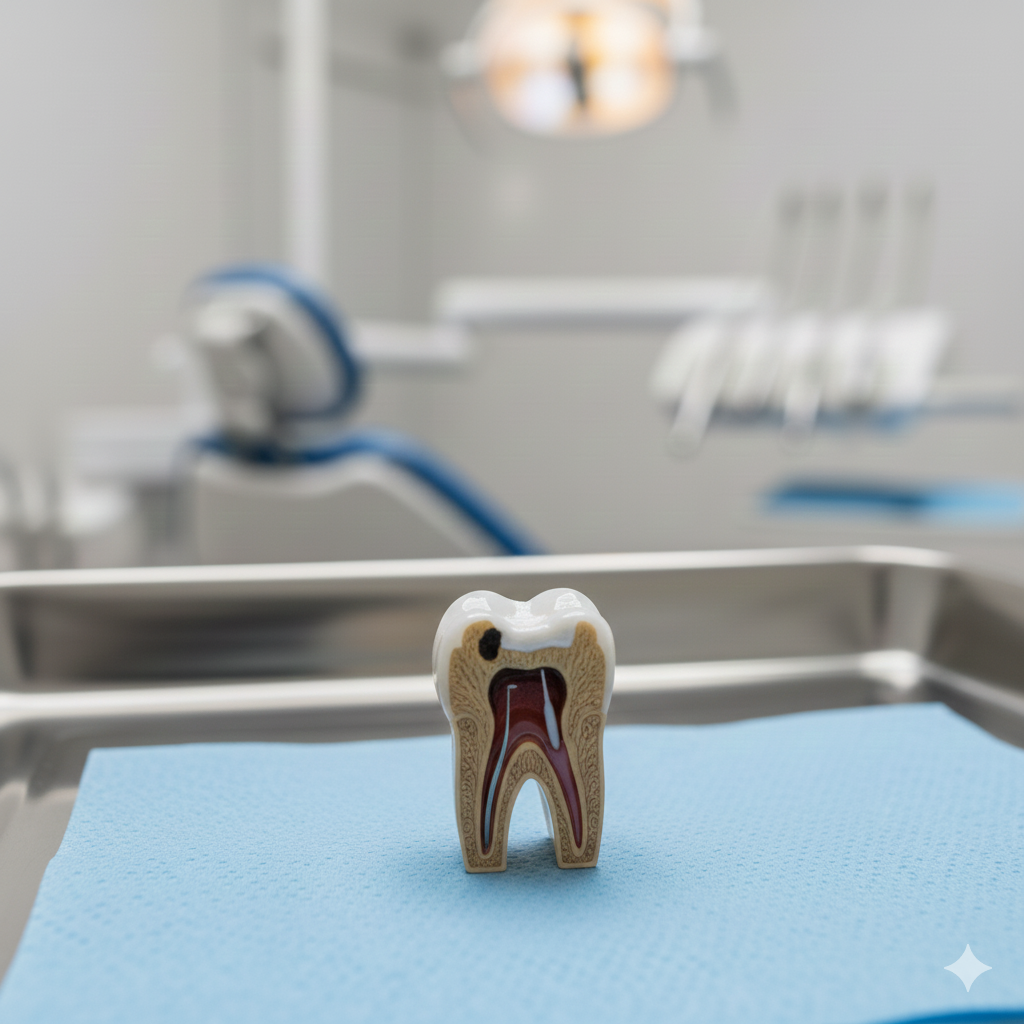
One of the most harmful misconceptions in pediatric dental care is "why treat baby teeth — they'll fall out anyway." This misunderstanding leads to preventable suffering and long-term permanent damage. Primary (milk) teeth serve critical functions beyond chewing: they hold space in the developing jaw for the permanent teeth below them. When a primary molar is lost prematurely due to untreated decay or extraction, adjacent teeth drift into the space. When the permanent tooth finally attempts to erupt, it finds a blocked pathway and erupts in an incorrect position, rotated, or remains partially impacted — requiring years of orthodontic correction.
Baby Teeth Eruption Timeline
Understanding the normal sequence helps parents identify early problems:
- 6–10 months: Lower central incisors (bottom front teeth) are first to erupt.
- 8–12 months: Upper central incisors appear.
- 16–22 months: Canines (cuspids) in both jaws.
- 24–33 months: Second primary molars — completing the 20 primary teeth.
- Ages 6–7: First permanent molars erupt behind the primary teeth without displacing any baby teeth — these are often called "6-year molars" and are among the most cavity-prone teeth.
- Ages 6–12: Primary teeth are gradually replaced by 28 permanent teeth.
- Ages 17–25: Third molars (wisdom teeth) attempt to erupt.
Baby Bottle Tooth Decay: A Preventable Epidemic
Baby Bottle Tooth Decay (BBTD) — also called Early Childhood Caries (ECC) — is the most common chronic childhood disease worldwide, affecting up to 28% of children aged 2–5 in India according to national oral health surveys. It occurs when milk (breast milk, formula, or cow's milk) or fruit juice bathes the teeth for prolonged periods, particularly during sleep. Bacteria ferment the sugars and produce acids that erode the thin enamel of primary teeth rapidly. Prevention: never put a child to bed with a bottle containing anything other than water; wipe gums with a clean moist cloth after every feeding from birth; transition to a sippy cup by 12 months.
Fluoride and Children: Myth vs Fact
Fluoride strengthens tooth enamel by incorporating into the crystalline structure and making it significantly more resistant to acid attacks. Concerns about fluorosis (white spots from excessive fluoride intake) are valid but require excessive consumption, typically from swallowing large amounts of toothpaste or drinking fluoridated water above recommended levels. Here is the safe guideline:
- From first tooth to age 3: Use fluoride toothpaste in a rice-grain amount (smear). This provides protective benefits with negligible ingestion risk.
- Ages 3–6: Use a pea-sized amount of fluoride toothpaste. Teach the child to spit — do not rinse vigorously.
- Ages 6+: Standard adult pea-sized amount, twice daily.
- Topical fluoride varnish application in clinic: Recommended every 6 months for high-caries-risk children.
- At Shekhar Dental Clinic, we apply fluoride varnish as part of our free Sunday comprehensive checkup.
Dental Sealants: The Most Underused Preventive Tool
Dental sealants are thin plastic coatings painted onto the chewing surfaces of the permanent back molars — where 80–90% of childhood cavities occur. The deep pits and fissures of molars trap food and bacteria that a toothbrush bristle cannot reach, even with perfect brushing technique. A sealant fills these grooves, creating a smooth, easy-to-clean surface. Applied in one quick painless visit with no drilling and no anesthesia, sealants reduce cavity risk in treated molars by up to 80%. The optimal time for first molar sealants is age 6–7, when the permanent first molars fully erupt.
When to Begin Orthodontic Assessment for Children
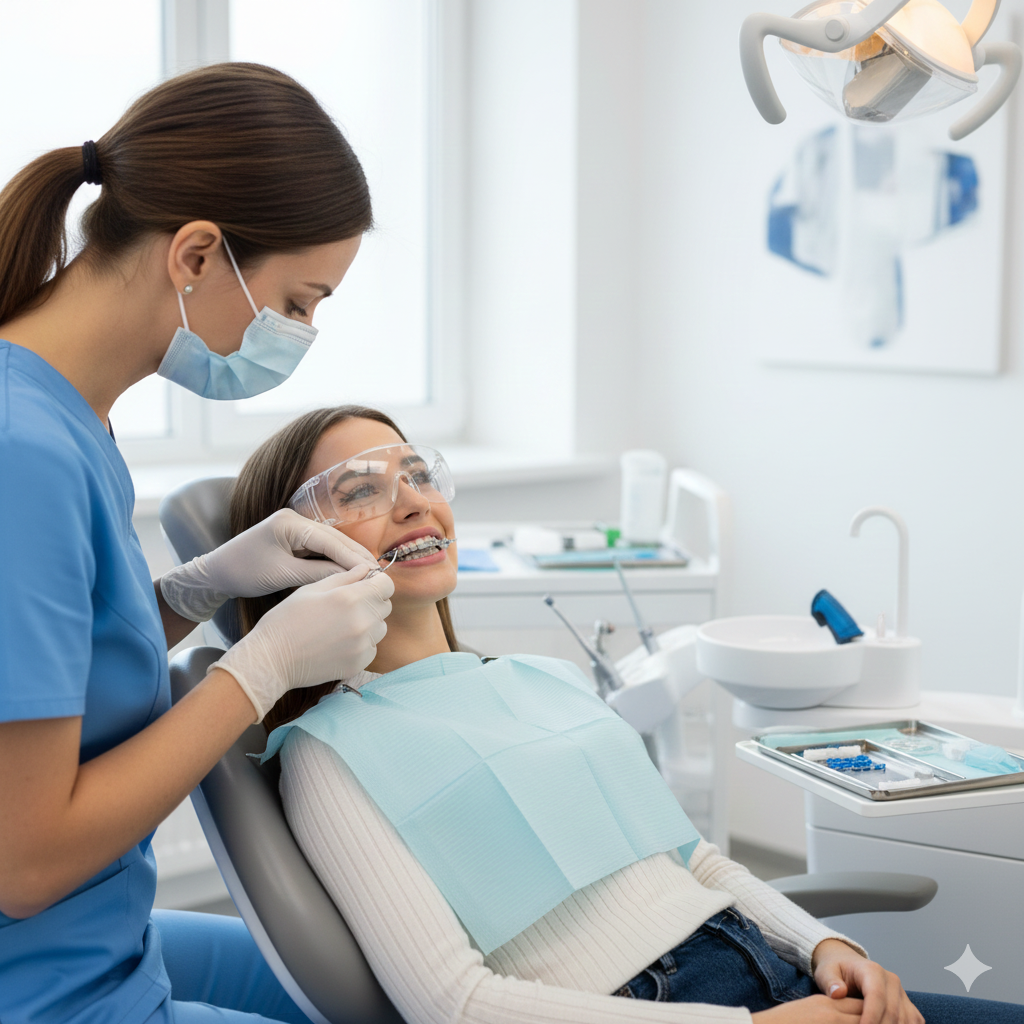
Many parents assume orthodontic treatment starts only in the teenage years. Modern orthodontists recommend the first orthodontic assessment at age 7 — when the mix of baby and permanent teeth allows evaluation of jaw relationship, bite patterns, and early identification of problems. Early-phase orthodontic treatment (Phase I) between ages 7–10 can use growth of the jaw to correct skeletal problems like narrow arches, crossbites, and underbites far more efficiently than waiting for full permanent dentition. At Shekhar Dental Clinic, we provide complimentary orthodontic assessments for children as part of the free Sunday clinic.